

The role of technology in protecting artworks
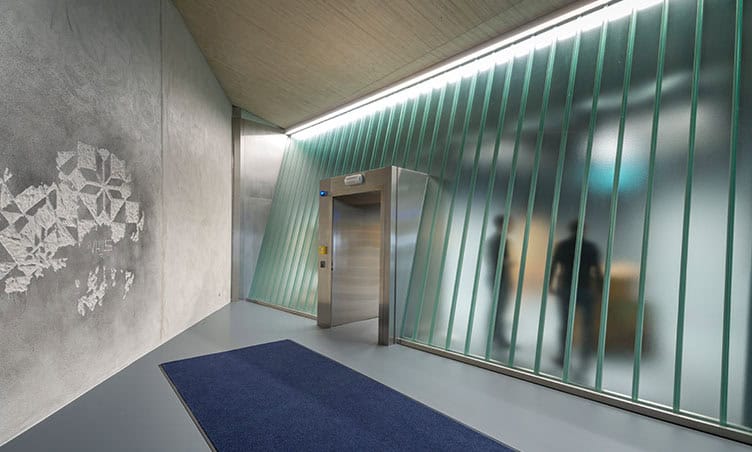
Beyond their aesthetic value, artworks represent both cultural heritage and financial assets. Their protection no longer depends solely on reinforced walls — technology has become central to ensuring confidential storage and a highly secure facility. Smart sensors (IoT), biometric access control, analytical video surveillance, and real-time climate monitoring are redefining security standards and strengthening the trust of collectors, museums, and investors.
1/ Why technology has become essential
1.1 An exposed market with growing expectations
The global art market is estimated at USD 57.5 billion in 2024, with increasing polarization and a decline in the ultra-high-end segment — fueling a growing demand for traceability, security, and insurance around collections (Art Basel & UBS, 2025).
1.2 Physical security + digital protection
A secure art storage facility combines physical measures (perimeter control, 24/7 video surveillance, fire detection) with digital safeguards (encrypted inventories, identity management, timestamped access logs). This hybrid approach enhances resilience against theft, damage, and cyber risks.
2/ Access control and biometrics: the first line of defense
2.1 Restricted access and verified identity
High-security storage relies on biometric authentication (fingerprint, facial recognition) combined with multi-factor verification and access profiles by sensitive zone. Every entry is timestamped and auditable.
2.2 Traceability and confidentiality
Encrypted logs track who accessed what and when — reassuring for family offices and private banks. In addition, AML/CFT compliance in Luxembourg requires robust client identification (KYC) and audit trails, strengthening the integrity of artwork deposits.
3/ Smart surveillance and intrusion detection
3.1 24/7 analytical video monitoring
High-definition cameras equipped with video analytics (motion, perimeter crossing) trigger real-time alerts and verification procedures, in line with museum best practices.
3.2 Multi-sensor redundancy
Door, vibration, shock, smoke, and particle detectors — combined with redundant alarm systems — anticipate any attempt at intrusion or sabotage.
4/ Climate monitoring: technology serving preservation
4.1 Reference ranges and stability
Stability is key: for most collections, maintaining stable conditions (typically ~20–22°C and ~50–60% RH) prevents expansion, micro-cracking, corrosion, and mold. The Climate Guidelines and ClimaSpec from the Canadian Conservation Institute provide recommendations by material type and include tools such as mold risk calculators.
4.2 IoT sensors and real-time alerts
Networked sensors (temperature, humidity, particle monitoring) continuously send timestamped data; thresholds trigger proactive alerts to allow intervention before any deviation affects preservation. To reduce cyber exposure, IoT security best practices (segmented networks, updates, hardened access) are essential.
For an end-to-end approach, see also artwork transport.
5/ Technology as a driver of trust and value
5.1 Data as proof
Exportable climate reports, access audit trails, and preventive maintenance logs provide documented evidence that reassures insurers and potential buyers — strengthening asset value and provenance credibility.
5.2 A secure client experience
Private access by appointment, dedicated viewing areas, contractual confidentiality, and minimal disclosure of sensitive data all contribute to building trust. To learn more about Fortius’ philosophy, visit our About page.
FAQ
1. What’s the difference between physical and digital security?
Physical security protects the site (access, cameras, detection), while digital security safeguards data and inventories (encryption, identity management, logging). Both are complementary.
2. How does technology enhance confidentiality?
Through encrypted records, strict access control, and AML/CFT (KYC and documentation) compliance — all mandatory in Luxembourg’s art sector.
3. What climate parameters should be maintained to minimize risk?
Stable conditions around 20–22°C and 50–60% RH for most collections, adjusted depending on materials; the key factors are stability and continuous monitoring.
4. Can I access my artworks whenever I wish?
Yes, by appointment, in private and secure spaces, with full traceability.
Technology is redefining what it means to offer confidential storage and a high-security art facility: biometric access control, intelligent video surveillance, IoT sensors, and climate monitoring built on internationally recognized standards. The result: better-protected artworks, reinforced compliance, and documented assurance that supports asset value.
Need tailored support? Visit our page on art storage in Luxembourg and contact our team.
Similar articles

Security audit: what does flawless storage look like?
In a world where the value of an asset goes far beyond its price, security becomes a non-negotiable requirement. Fine…

Luxury storage units: far more than a simple warehouse
A luxury storage unit is far more than a simple storage space. For collectors, investors, or owners of valuable assets,…

Storing a private collection: expert guidance from Fortius
Building a private collection is first and foremost an emotional and cultural journey. Whether it includes paintings, sculptures, photographs or…

Art enthusiast?
Download the worldwide art sales calendar and never miss an important sale or event!
Discover the calendar