






Security audit: what does flawless storage look like?
In a world where the value of an asset goes far beyond its price, security becomes a non-negotiable requirement. Fine art, collectible watches, sensitive archives, rare wines: every valuable object demands full protection — physical, digital, and regulatory. Yet behind any secure warehouse, only one question truly matters: is the setup genuinely fail-safe?
This is where the security audit comes in: a rigorous process designed to verify that every layer of protection operates without weakness. From biometric access to power redundancy, from climate monitoring to encrypted inventories, an audit reveals the real robustness of confidential storage.
This article outlines the key criteria of a professional audit, the international standards to comply with, and the types of proof expected by collectors, family offices, and institutions.
What is a security audit in a high-security warehouse?
A multi-dimensional verification process
A security audit simultaneously examines:
- physical security (access, video surveillance, intrusion detection),
- digital security (encrypted inventories, access management, network protection),
- climate security (temperature, humidity, stability),
- legal and customs compliance (AMLD5, registers, customs controls).
According to ENISA (2024), a high-end storage facility must integrate segmented, auditable systems in order to limit cyber risk and guarantee operational continuity.
Why security audits have become essential
The Deloitte Art & Finance Report 2025 shows that 60% of investors consider security and traceability to be the number one criteria when choosing a service provider.
In a market where the value of artworks and collectible objects continues to rise, regular assessment of security systems has become an indispensable proof of trust.
The key pillars assessed during a security audit
Physical security: the first line of defence
Controlled access and biometrics
Any secure warehouse must:
- verify identity via biometrics plus a secondary factor (badge, code),
- limit access by zones,
- log every entry and exit.
Intelligent video surveillance
Museum standards recommend:
- HD cameras with behavioural analytics,
- immediate visual verification,
- secure retention of video footage.
Protected infrastructure
This includes:
- perimeter control,
- shock and vibration detection,
- redundant alarm systems,
- inert-gas fire suppression systems (AAM & ICOM recommendations).
Learn more about our fine art storage services in Luxembourg.
Climate security: stabilising to preserve
The audit verifies:
- thermal stability (20–22°C),
- controlled humidity (50–60%),
- air filtration and renewal,
- multi-point sensors with automatic alerts.
The Climate Guidelines of the Canadian Conservation Institute confirm that stability — more than the absolute values — is decisive in preventing cracking, mould, oxidation, and degradation.
The importance of monitoring
A security audit requires:
- encrypted IoT sensors (AES-256),
- timestamped data logging,
- 10-year data archiving,
- proactive alerts in the event of a deviation.
Digital security: protecting data as much as assets
Encrypted inventories
Truly high-security storage requires:
- digitised, encrypted inventories,
- isolated servers,
- strict identity and access control.
Regulatory traceability (AMLD5)
In Luxembourg, warehouses must comply with:
- identification of beneficial owners,
- sanctions and PEP screening,
- customs registers audited on a regular basis.
To see how the logistics chain fits into the Fortius ecosystem, visit our page on secure fine art transport.
How does a security audit work in practice?
Phase 1: comprehensive diagnostic
Auditors assess:
- the site layout,
- access points,
- surveillance systems,
- network architecture,
- climate control equipment.
Phase 2: tests and simulations
This includes, in particular, tests:
- of intrusion attempts,
- of power outages,
- of climate system failures,
- of load and capacity.
Phase 3: report and documented evidence
A professional audit provides:
- a timestamped access register,
- climate reports,
- system logs,
- certifications (ISO 11799, ICOM, ICCROM),
- evidence of customs compliance.
These elements are essential for specialist insurers and family offices.
The signs that storage is truly fail-safe
Recognised standards and certifications
A trustworthy warehouse adheres to:
- ISO 11799 (document and cultural heritage storage),
- ICOM & ICCROM recommendations,
- Climate Guidelines,
- AMLD5 (regulatory transparency).
Full redundancy
High-security storage must offer:
- dual power supply,
- segmented networks,
- automatic fire protection systems with dual circuits.
Contractual confidentiality
Premium providers such as Fortius guarantee:
- anonymised inventories,
- restricted access,
- no external disclosure,
- transparent communication about internal protocols.
To learn more about the DNA, philosophy, and heritage of excellence at Fortius, visit our dedicated page.
Conclusion
Flawless storage is never the result of chance: it comes from a combination of technology, robust protocols, regulatory compliance, and constant human oversight.
A security audit provides proof that every layer — from access control to climate monitoring — operates in full alignment.
For collectors, family offices, and institutions, choosing a provider capable of delivering this level of documented assurance is a major lever for peace of mind and long-term asset value.
Would you like a tailored audit or an evaluation of your current setup?
Fortius supports you with an approach grounded in security, confidentiality, and technical excellence. Book a complimentary discovery call with a member of our team.
FAQ
1. What is a security audit for a high-security warehouse?
It is a comprehensive analysis of physical, digital, climate, and regulatory systems, ensuring absolute protection of stored assets.
2. Which standards must be respected?
ISO 11799, ICOM/ICCROM recommendations, Climate Guidelines 2024, ENISA best practices for IoT, and AMLD5 compliance.
3. How can I verify a provider’s reliability?
By requesting: access logs, timestamped climate reports, certificates, AML/KYC procedures, redundancy evidence, and operational documentation.
4. Why is auditing crucial for high-value assets?
It guarantees security, prevents incidents, reassures insurers and buyers, and supports long-term patrimonial value.
Similar articles

Luxury storage units: far more than a simple warehouse
A luxury storage unit is far more than a simple storage space. For collectors, investors, or owners of valuable assets,…

Storing a private collection: expert guidance from Fortius
Building a private collection is first and foremost an emotional and cultural journey. Whether it includes paintings, sculptures, photographs or…

Absolute discretion: our commitment for sensitive assets
In the world of high-end storage, discretion is not a marketing argument – it is a culture. Whether it concerns…

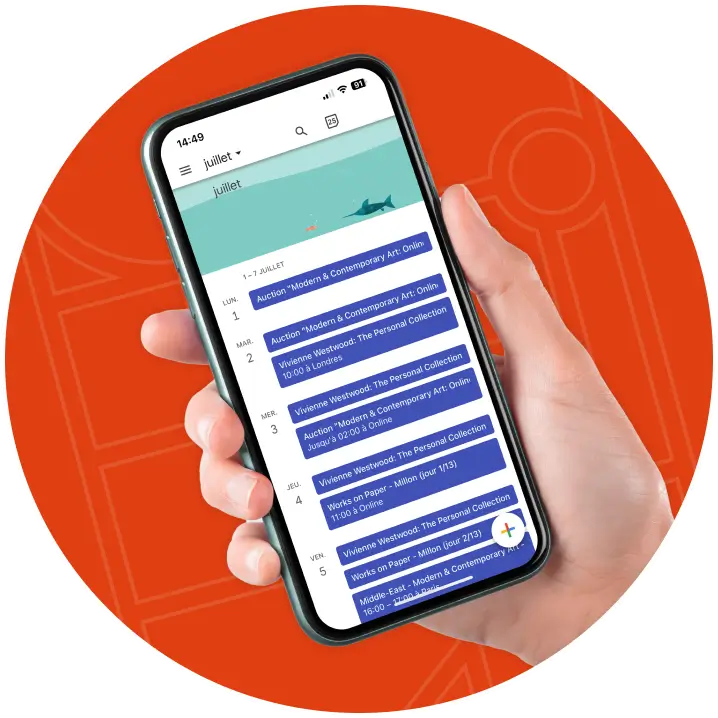
Art enthusiast?
Download the worldwide art sales calendar and never miss an important sale or event!
Discover the calendar